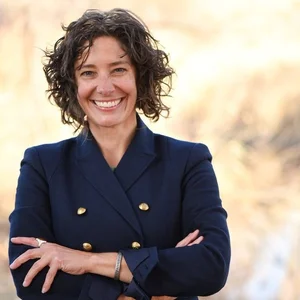
Who are you without the professional title?
One of the tender parts of supporting folks through career pivots is when they realize how much of their identity has been shaped by or wrapped up in a title, institution, field, or role.
It makes sense that this happens. This sort of identity entanglement is typically considered a success, as weird as that may sound. Take it from someone whose role was to orient new graduate students into the field of higher education.
The goal of any professional field is to socialize individuals into a professional identity where you reflect in-depth knowledge, norms, values, and standards throughout your career. In essence, taking on a professional identity is a requirement of professionalism. This is why it’s so entangled.
It’s in the design of what it means to be a professional (academic, educator, healthcare practitioner, environmentalist, therapist, etc). Professional development and professional associations with their conferences and trainings all reinforce this.
And one of the biggest hooks is the requirement to cultivate a life of the mind. This applies to more than academics because part of what makes a job a profession or not is a commitment to lifelong learning.
What happens when our work cultures teach us to live primarily from the mind?
You feel guilty resting and believe exhaustion means you’re working hard enough.
You struggle to enjoy creativity without an outcome and want the validation of achievement.
You over-intellectualize emotions instead of feeling them and disconnect from your body when stressed or grieving.
You struggle to access play or joy in part because there’s a forced embodied disconnection from nature or natural cycles.
It’s as if this life of the mind has required regular sacrificing of our connection to body, creativity, relationships, and Earthly belonging.
As I state in the Toolkit:
External career shocks often lead to career grief, identity loss, financial strain, and decision paralysis. To navigate this, you need embodied resilience that isn't about "bouncing back." It's about adapting and transforming internally, so you can move forward externally.
This process includes:
Grief practices (acknowledging and processing loss)
Creativity and imagination (exploring possibilities)
Self-awareness and mindset tools (shifting perspectives)
Embodied action (grounding, taking intentional steps)
Clarity doesn’t always come first. It comes through movement.
Regardless of whether we let that career-informed identity go a little bit by our own choosing or the letting-go is chosen for us, identity-related career grief comes for all of us at some point. (I’d argue it comes for us at many points. actually.)
So the practice today is to get out of your head.
Each day this week, reclaim connection back to body - your own and Earth.
Feel the wisdom that exists in these relationships in ways that your intellect alone cannot access. Feel who you are without any titles, roles, or professionalism.
Two practices I recommend to everyone:
Try the short and sweet practices on those posts and let me know how it goes. I know it’s a challenge to reconnect into our bodies when everything about how we’ve been socialized toward requires disconnection. That’s why we go easy - little practices to unfurl over time.