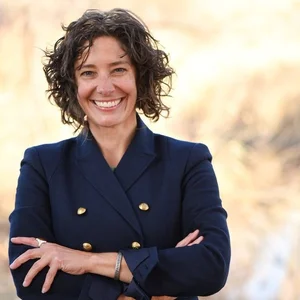
Your body isn't failing. It's responding.
That line hasn’t always been easy for me to write, let alone to write it fully believing it to be true. There have been a few key points in my adult life where I did blame my body for what I believe was it failing me, as if ‘it’ - my body - is separate from me.
In 2016, when my cervical discs herniated and I got shingles on top of it, I hustled healing because I got my first book contract that summer, which made injury very inconvenient to my work timeline. And then, I felt betrayed by my body in early menopause* when my hormone levels dropped to pre-pubescent levels suddenly.
But more so than those perceived ‘failings, my body has done miraculous feats. I mean, daily, my body communicates so much information. Our practice is to listen and respond accordingly.
Here’s what I fully understand now:
Your body is not a problem to solve. It is a source of information about the conditions you're living inside and where you need to let go and re-story. The embodied practices are the work.
That is where your body reconnection and nervous-system work becomes deinstitutionalizing rather than another wellness intervention. Because the institutionalized response is: My body is struggling, so I need to fix my body so I can keep functioning. (Hello, old me raising my hand)
The deinstitutionalized response becomes: My body is expressing something. Let me pause and see what my body is telling me about the way I'm living and working and the conditions around me. What are the system’s conditions?
Your distress may be a signal, and it is most absolutely not a personal defect. This world is a lot, and humans did not evolve for this hyperconnected, always-on world. So before asking how to become more productive, patient, or resilient, ask what conditions are producing the distress. Discern where and if you can adjust those conditions, move out of their way, or demand change.
Before I wrap up today, I want to acknowledge and hold gently that I know you’ve got your own body story and capacity situation. I am honored to hear so many of them. Health changes and aging are not productivity issues. They are invitations for all of us to slow the fuck down and invite humanity back into our relationships with each other after we cultivate some loving-kindness and compassion for ourselves.
Over the last few weeks, I have been reviewing the research and stories on the many health issues that arise during students’ educational journey as part of an introductory chapter on Career Grief I wrote for an edited book, PhD in Progress (set to come out in 2027).
Far too often, invisible health concerns and experiences turn into bullying, marginalization, and added oppression and biases from faculty, staff, and the systems. I will continue to argue (and train) for grief-informed academic culture and policies because right now they too narrowly define academic rigor and productivity in unnecessary and extremely ableist, privileged ways.
*I’ve written before how menopause transitions need to be a part of all leadership and professional development. Menopause has lessons for all of us, whether your body goes through it or not: burn away all the bullshittery, and what’s left standing is what still matters when you let go.
Our bodies' responses also offer regular reminders that this modern world moves too fast and promotes an unnatural cycle of constant linear upward growth and productivity.