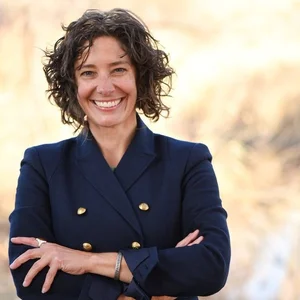
I spent last week with my parents in rural Louisiana.
I love my family. And increasingly, every time I return, I’m reminded how much of what we call self-care, rest, and regulation help us manage and how little those things can do to change the conditions we’re being asked to manage.
Getting there is a trek in and of itself: a flight to Dallas, followed by a 5-hour rental car drive. There’s no convenient or closer airport option. We make a good time out of doing it, though. On our return, we stayed in a hotel in Dallas before flying back to Denver.
Sometime after midnight, after I had fallen asleep, I woke up so sick I thought I had food poisoning or norovirus. I genuinely wondered whether I’d be able to get on the plane the next day.
My mom has advancing dementia. My dad has his own health issues, and he is her full-time caregiver without any nearby neighbors or reliable cell service. His nerves are beyond frayed.
As we were leaving, he said, “Let me know if you have any ideas?” He was asking about my mom and her care. It broke my heart all over.
I don’t. And I want to sit in that for a second. My grief is deep and ongoing. It’s a form of grief called ambiguous grief - grieving the loss of someone who is still alive. I’ve been grieving the loss of my mother for years now while she is still alive. It is a particularly cruel disease in that way.
Here’s where I see the connection to this month’s Grove community focus on The Myth of the Personal Solution, with the central question: What if the problem isn't that you haven't figured out how to manage yourself well enough, but that you've been trying to adapt yourself to conditions that aren't designed to sustain you?
I don’t have a solution. I’ve done all the research. I can’t move my family there. My parents aren’t going to move to Colorado. I know the services and the lack of them. I know the costs and the lack of money to pay for them. I love my parents and want to help. I can’t cure the disease or change my mother’s health or risk factors. I want there to be an answer that makes this easier.
But dementia is a disease without a cure, in a geographical region and country that lacks infrastructure available for sufferers and their caregivers. Standard Medicare, for instance, does not cover long-term custodial nursing home care for dementia. I can’t create an infrastructure that doesn’t exist, let alone social services that the current administration in both LA and the US doesn’t want. My mom, like 7+million other people in the US alone, has been failed by systems. The majority of care and costs are borne by families and unpaid caregivers, like my dad.
The experience and cost are deeply and painfully personal. The conditions shaping it are systemic. One of the ways institutions and larger systems (families are a system) sustain themselves is by turning systemic problems into individual assignments. There is a difference between recognizing where we have agency and accepting responsibility for fixing conditions that are far bigger than any one person.
When care infrastructure isn’t there, families, largely women or daughters, are expected to fill the gap. Sometimes they can and do. And there is always a cost. When work is unsustainable, you might be told to get better at managing time, regulating your nervous system, or setting boundaries that can be broken by management but not family or self. When the economy and job markets get tanked by AI and greedy CEOs, they tell you to upskill and work harder.
When you or I can’t complete all the juggling that isn’t juggle-able, many of us feel like we’ve failed. Trust me, I have felt that many times.
I don't have a solution for my parents' situation. I have grief. I have love. I have some choices about how I show up. And I have to keep learning the difference between what I can carry, how I can still care, and what should never have been only individualized.
I can learn to stay present with what is hard without automatically turning it into another self-improvement project. I don’t have proof as to why I got so sick that night in Dallas, but I have an inclination.
I'd spent days navigating the emotional, cognitive, and physical demands of being with my family, witnessing my mother's decline, worrying about my dad, and holding the grief of a situation I cannot fix. I was managing, repeating answers, following my mom room to room so my dad could have a break.
And then, when I finally had space to relax, my body had something to say. While it’s not meant to be a neat and tidy story about the power of our nervous systems, I do want to pay attention to the possibility that we don't always recognize what we're carrying while we're carrying it. Sometimes the cost becomes visible only when we pause.
That’s what we’re doing this month together. And you can join us tomorrow for the conversation.
The Myth of the Personal Solution
Wednesday, November 11 from 10-11am MT